.jpeg)
Zoey Edenholm only warns me about the
seatbelt. “That might be pretty tight,” she
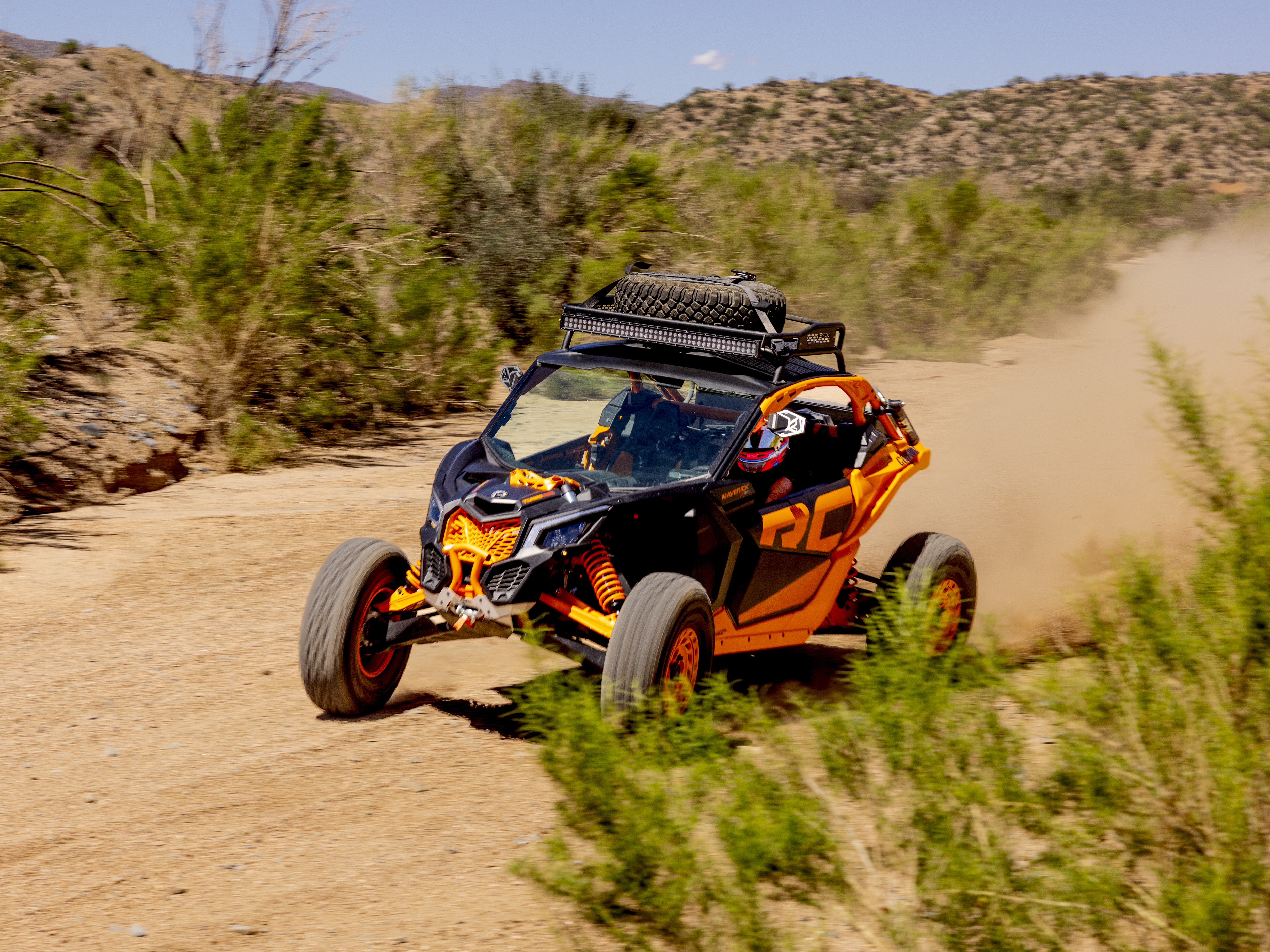
tells me. I’m strapping into a full-torso harness in the passenger seat of Edenholm’s Can-Am Maverick X3 Rock Crawler, a black-and-orange beast that the 24-year-old uses to carve through the Arizona desert in her offseason. The snap of the buckle is the last thing I hear before the engine revs — then we’re off down the sandy trail. It’s my first time in one of these, and the first thing I notice as we come into the first turn is that Edenholm is not braking.
These trails are a refuge for Edenholm, who came up in the Scottsdale karting scene and has always called the area home, even as dual careers as a racer and influencer have taken her around the world and to an FIA Silver license grade. Edenholm rose up the ranks as a teenager, winning a couple races in California ProKarts, and reaching the Formula 4 United States Championship in 2019. (Her high point that year was a top-10 finish, as a rookie, at Virginia International Raceway.) Edenholm has driven in a handful of series as she’s built her motorsport career — most recently in Stadium Super Trucks, where her hot pink 650-horsepower, V8-powered truck looked just a little different than everything else on track at Long Beach this year. She’s a social media fixture in the Formula 1 world, where she’s served as a paddock club host for both the series and the Haas team. If it is motorsport, Edenholm has probably either driven in the series or become an authority on it for an audience closing in on 200k followers.
When she was a teenager coming up in karting, Edenholm had a problem. She had the racing talent to make a career on track, in some series or another, but didn’t have the financial might to get teams’ attention. She realized that her best shot at a race seat was to build a following. She wouldn’t just be a driver who could hold her own on the marketing front; she would make herself a full-on social media star who could use that half of her career to open doors on track. “It’s not so much how well you can drive a race car,” she tells me at a Scottsdale cafe one September morning. “You could be the best race car driver, and nobody knows it because you don’t have the money or the funding to get there.”
We are sitting at an outdoor table, and Edenholm helpfully pauses as a dump truck rolls by, threatening to drown her out on my voice recorder. “Funding is a huge part of motorsport,” she continues. “For younger and lower-tier categories, and even IndyCar, it’s switched. Back in the day, teams would hire drivers. Now it’s more drivers finding the sponsorship.”
This inversion has filtered down the pipeline to the lowest levels of racing. Edenholm doesn’t seem to relish that it is a requirement for anyone without a family war chest to get into the business. But the game is the game, and Edenholm seems comfortable playing it. “I would like to see it flip again, because teams should also be finding sponsorship, not just drivers,” she says. “Every time you approach a team, it’s, ‘OK, how much money can you bring to the table? Who are your sponsors?’” Primarily by building a TikTok following of about 150k, Edenholm has managed to ensure that she always has an answer to that question.
Driving in the Stadium Super Trucks series costs $30,000 per race. It’s her sponsorship deals, with brands such as Purely Sedona water and Lucy nicotine, that allow her to compete.
.jpeg)
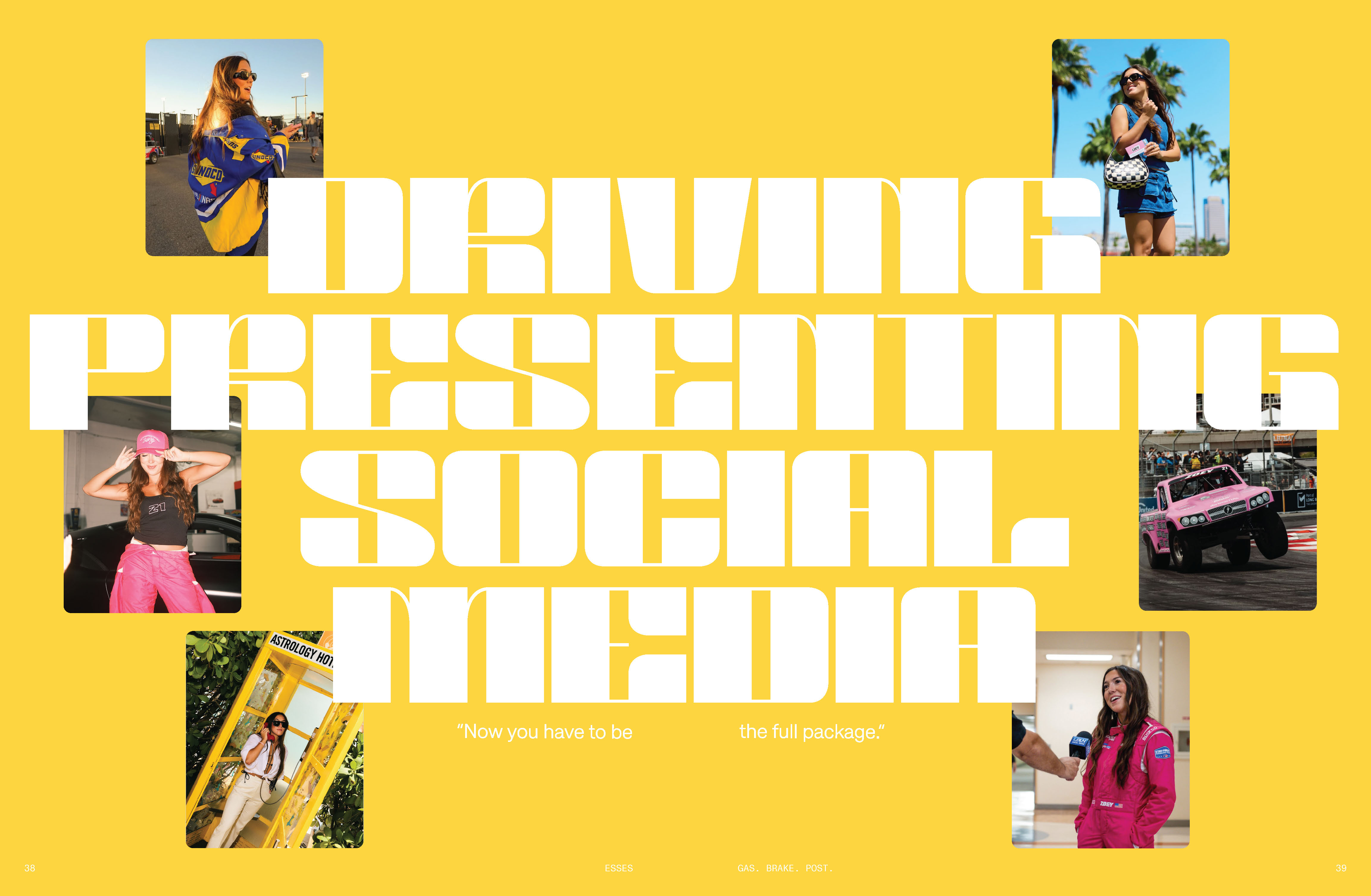
Drivers have been scheming up business ideas to gain race seats for practically as long as there have been race cars. Those entanglements have required thousands of drivers to take on hybrid driver-ambassador roles. But if a typical driver is something like 30 percent marketer and 70 percent racer, Edenholm is closer to 50-50. Without one career, she explains, there’s no chance she’d have the other. “Now you have to be the full package,” she says. “Driving, presenting, and social media.”
A typical pay-driver path to professional racing wasn’t in the cards for Edenholm. (“Those people do get far, though, with the cards that they’re dealt,” she says.) Her parents helped her financially as a junior racer, but their primary assistance was logistical, even mechanical. Edenholm was an 11-year-old gymnast who “thought I was going to the Olympics” when a family friend suggested karting. Edenholm’s mom was her first mechanic. “She was figuring out how to build engines and I was figuring out how to drive,” Edenholm says. “There were a lot of arguments about why she couldn’t figure out how to build the kart and why I couldn’t figure out how to drive.” All of that happened in fits and starts, requiring a trip from the family garage to a Scottsdale track each time, save for very occasional testing in a neighborhood cul-de-sac. “Our neighbor probably didn’t like me for a second,” she says.
Edenholm has held onto that duct-tape-and-bubble-gum ethos as she has moved up in racing. With the prohibitive costs of trying to make it, she’s had to. As she sips her coffee, Edenholm runs me through some numbers. Even competing in karting as a kid required several thousand bucks for the actual kart, $500 for a track membership, and plenty more for a racing suit, a rib protector, and other gear. There are no mass-marketed rib protectors for women, she tells me. “By the time girls get to the end of their karting career where they would need a rib protector that fits, most of them have dropped out,” she says.
It only gets more expensive as a racer’s career progresses. Running through an entire season in F4 in 2019 cost about $300,000, an amount she didn’t just have lying around. Despite being armed with a much smaller social following at the time, Edenholm managed to get a sponsor to bite: Gas Monkey Energy. To call her pitch bootstrapped would be an understatement. Edenholm had figured out that Gas Monkey was in the market to sponsor a female driver. Leaning on skills she learned in high school photography classes, she built mockups of a Gas Monkey-sponsored F4 car, using Adobe Illustrator. The energy drink company was impressed enough with her DIY pitch to put their logo on her car. Edenholm was just 17 and racing single-seaters in a Formula 1 feeder series.
Motorsport’s audience still tilts male, and among the team principals and driving ranks, men make up a disproportionate supermajority. That reality has created a difficult sponsorship environment for female drivers. It remains a significant challenge for women to secure backing in the first place, let alone repeat it for the long term. (That even Danica Patrick lost a handful of them in her career is a testament to the challenge.) But in a world where a reported two percent of FIA-licensed drivers are women, Edenholm is now a standard-bearer for younger versions of herself. If you forgot that she was on the track, the sight of her pink truck flying off of ramps would remind you. “That’s one of the reasons why I’ve been able to get sponsorship for that truck — it’s hot pink, it’s loud,” she says. The pink truck is an especially useful conduit between Edenholm and her youngest fans. “I’m more known now as the pink truck girl than even my name.”
But on TikTok and Instagram, she’s not the pink truck girl; she’s @zoeyeracing. Her most viewed video has been seen 7 million times, and it speaks to Edenholm’s unique racing-influencing value prop. It shows Edenholm faux-intently listening to a guy at a bar telling her how to drive, with the caption “me on the weekends.” Then it cuts to the pink truck soaring through the air. It’s set to “That Don’t Impress Me Much,” and naturally the top comment is from Shania Twain herself: “GIRL. This is BADASS!!” This is a classic genre of Edenholm post. In another viral video, we see a man playing the role of “my best friend’s boyfriend” teaching Edenholm “how to drive.” It’s Racing Bulls driver Liam Lawson, who is, in real life, Edenholm’s best friend’s boyfriend. (This connection was a coincidence, not born out of motorsport ties.)
.jpeg)
Edenholm with her Can-Am Maverick X3 Rock Crawler outside of Scottsdale, Arizona.
When we meet in Scottsdale, I expect to encounter two versions of Edenholm: a racing Zoey and a social media Zoey. It would make sense, given the two-tracked career she leads. But the race car driver and the influencer are, I realize soon enough, one and the same. One of Edenholm’s best friends stands a few feet away shooting iPhone video while we’re talking, then again later as we ride through the desert in Edenholm’s Can-Am. The acts of hanging out with real friends and making content for a few hundred thousand internet friends are, at least for Edenholm, roughly the same thing. Racing and influencing have lots in common, too. Both are matters of performance — going fast, taking risks, and being interesting — and in the life Edenholm has built, neither works without the other. “I get sponsorship deals for my social media because of the story of the racing driver that I am,” she says. “And then in turn, I get sponsorship dollars for racing because I have the social media presence. They go hand in hand.”
We have spent the morning talking about all of this by the time I’ve strapped into Edenholm’s Can-Am. Which is good, because I quickly learn that a Can-Am is ridiculously, relentlessly loud. As Edenholm speeds past some cacti and into a turn, I try to ask how fast we’re going, but there’s no chance she hears me. A moment later, Edenholm yanks the wheel, and the mountains in the horizon disappear behind a cloud of dust. We speed off 45 degrees in the other direction and the desert becomes just a blur flying by. All I can see against the kicked-up earth is my driver’s hot pink helmet.