IN PARTNERSHIP WITH

.jpeg)
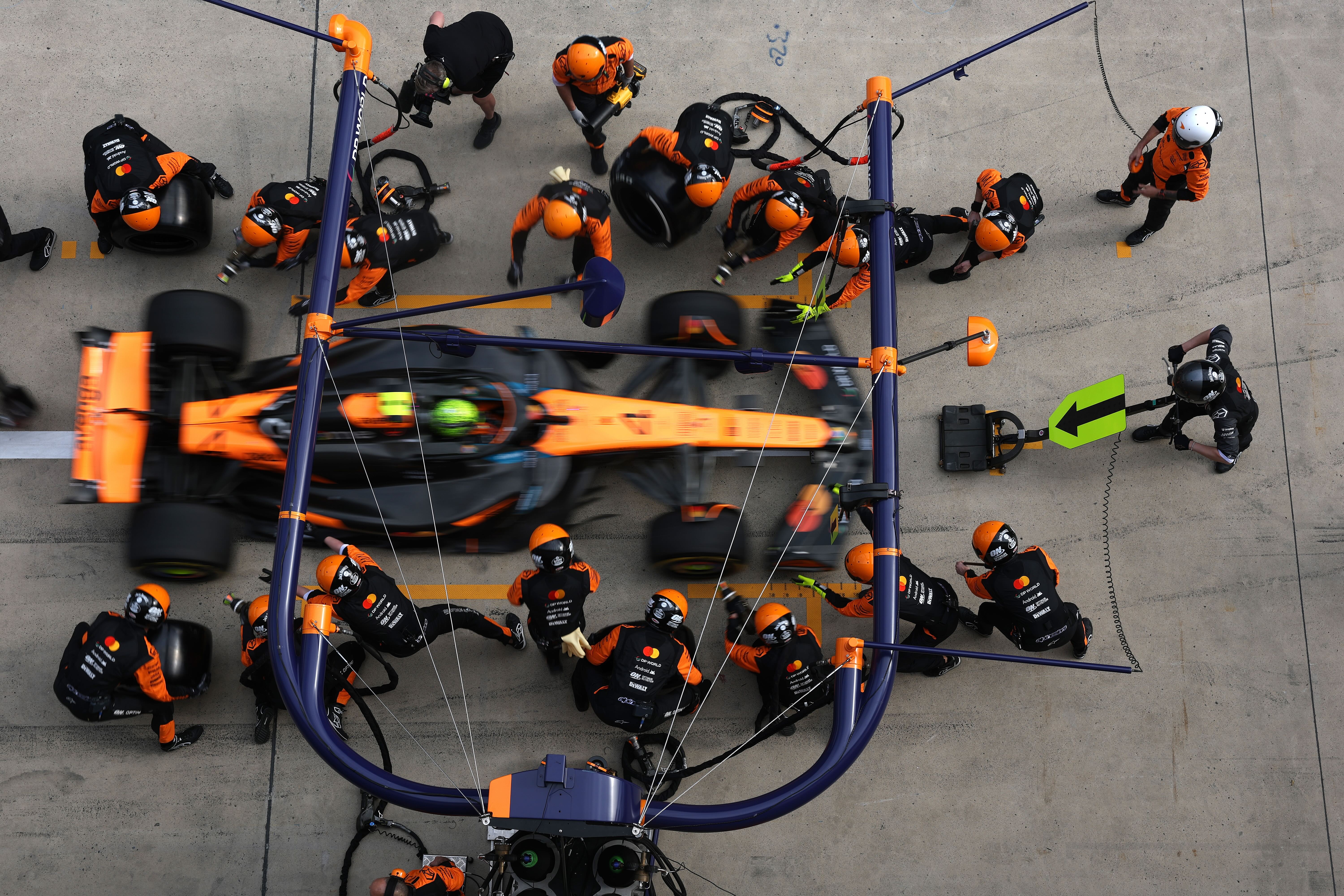
For 24 weekends between March and December, every eye is trained upon the two-to-four-miles of circuit. Hundreds of experts work countless hours and hundreds of millions of dollars are spent searching for tenths of a second for the cars on track.
But there is another race that covers more than 100,000 miles across five continents throughout a Formula 1 season. Speed and efficiency are just as pressing.
Most Formula 1 fans are broadly aware that teams have to move their million-dollar cars, pit equipment, and more across the world virtually every weekend from March through December. But when you actually dive into the nuanced logistics behind these moves, the impossible challenge starts to become clearer.
How do you transport precious freight to 24 races all around the world? What about especially tight timelines between races, such as Austin to Mexico City, Australia to China, or Vegas to Qatar?
You may not see much of the McLaren Mastercard F1 Team’s logistics picture on your TV screen each week, but it plays a vital and understated role in the sport.
An entire small village of ultra-sensitive equipment is being packed and unpacked at each stop — and the timelines are incredibly tight.
Every F1 team has an entire department dedicated to handling these logistics. These team members are rarely seen by the public, but what they do is remarkable. An astounding 1,200 cumulative tons of equipment are moved to and from each race, per a video on Formula 1’s YouTube page, using a combination of transport methods.
In addition to their own in-house team, McLaren has another advocate working with them on this essential process.
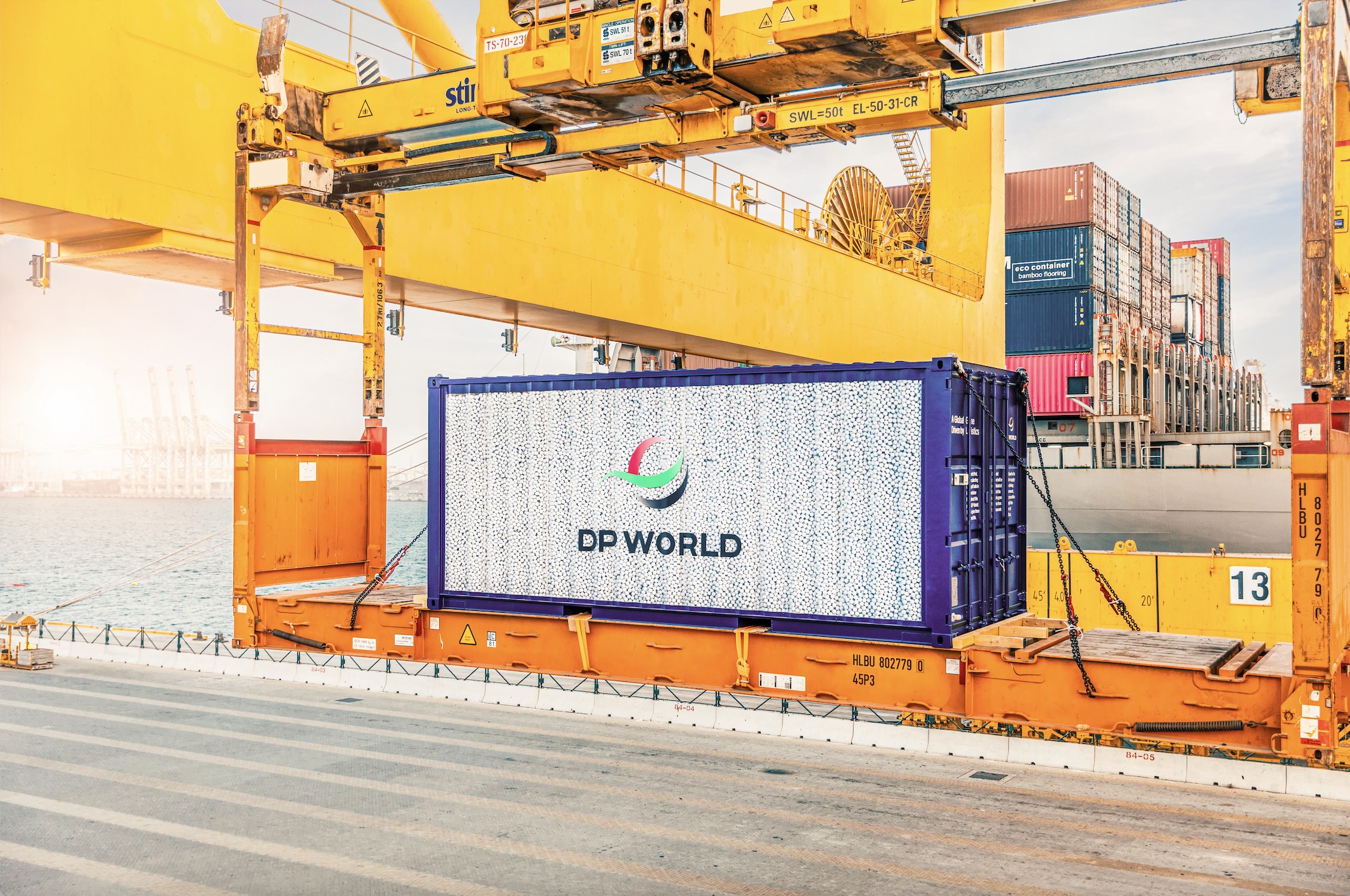
As a smart logistics expert, DP World, a worldwide logistics company that also serves as McLaren Mastercard Formula 1 Team’s Official Logistics Partner, can support McLaren’s in-house logistics team with planning, contingency modelling and coordination, helping assess alternate routings, back-up hubs, and time-critical scenarios where disruption could impact schedules.
More than just a brand partner, the value DP World brings is rooted in their global operations, synchronization, scale, readiness, and risk planning, enabling DP World to support the McLaren F1 team with making quickly informed decisions when turnarounds across the busy Formula 1 calendar are especially tight.
“Because being late is not an option,” says Daniel van Otterdijk, chief communications and government relations officer for DP World.
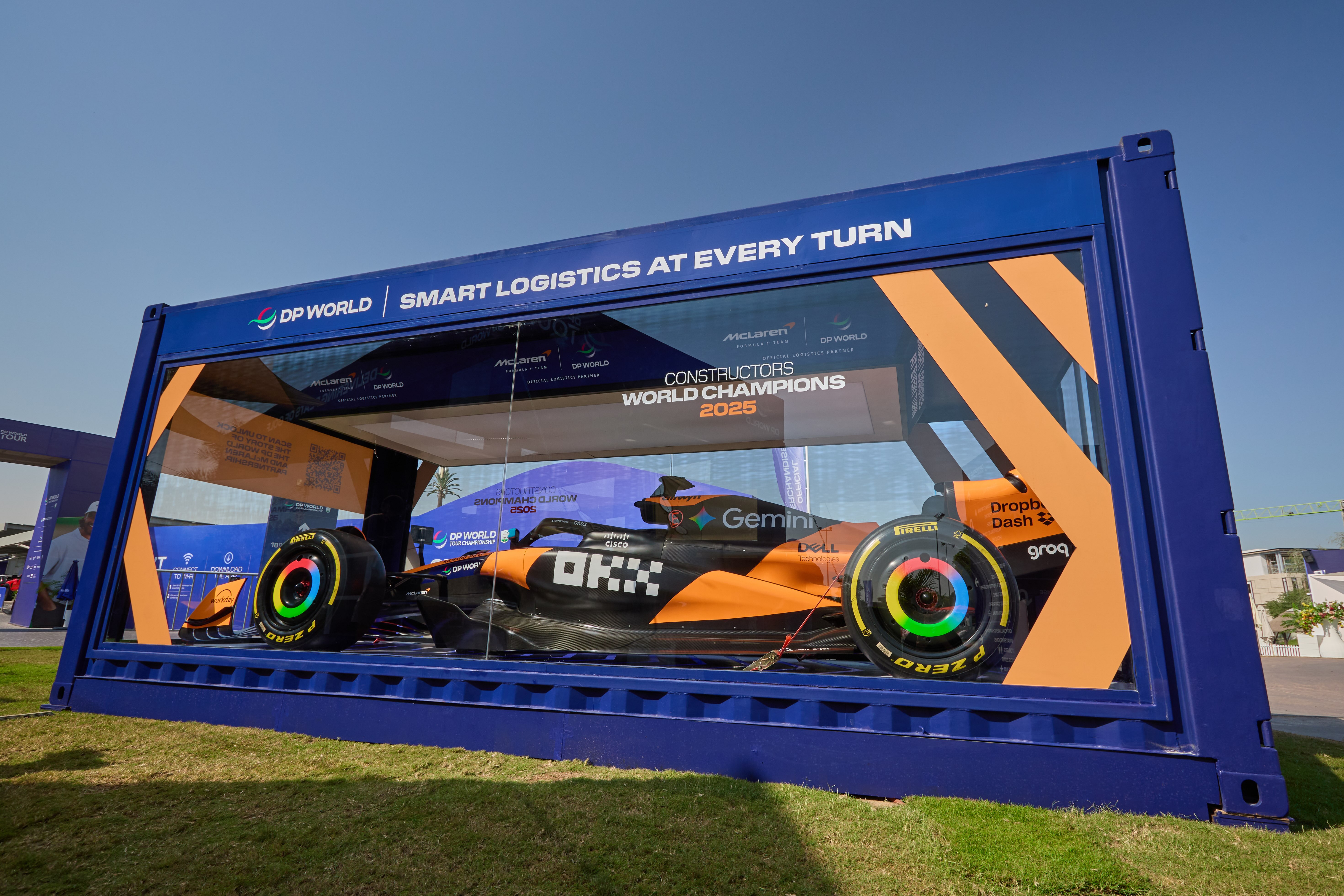
During the December-to-February offseason, when time is less of an obstacle, sea freight is used to transport the millions of dollars worth of team equipment. Sea freight is also strategically used throughout the season, with teams creating five-to-six duplicates of certain equipment and shipping them all by sea. This slower approach is worth it, because it vastly cuts cost and lowers environmental impact, compared to flying or trucking the cargo.
But for all race-to-race equipment needed during the season, shorter turnarounds necessitate air and land approaches.
Trucking is the simplest strategy for many stops during the European segments due to relative proximity between cities. But with often a week or less to cover thousands of miles, intercontinental trips during the season dictate air transport.
For the Vegas to Qatar commute, every second is essential. It is why, as midnight approaches in the Nevada desert, the 2025 Constructors’ World Champion McLaren crew is still hard at work. Space is limited on the air freights, so teams must select the most essential race gear which will then be flown to the next location.
Of course, these logistical decisions are choreographed a year or more in advance. Maximizing the amount of gear that can fit in each container while ensuring that no piece of equipment is ever damaged in transit is both an art and a science. Sensitive parts like power units which are covered in gold leaf or awkwardly shaped wings are packed in custom-designed casing.
Despite the mad dash of it all, everything is meticulously handled. Like a magic trick, before dawn has broken, the essential cargo disappears from the paddock and heads to the cargo planes.
“When you see it packed up and you see it rolled out, you can’t imagine how something sitting in the pit lane can fit into the type of space [the team] can put it in,” van Otterdijk says. “It’s almost like a jigsaw puzzle.”
Operating in nearly 80 ports and terminals across over 40 different countries, DP World is “an end to end logistics company, meaning factory floor to customer door,” van Otterdijk says. While they don’t manage the day-to-day movements of McLaren equipment, they help facilitate some of the transport and often advise on tight turnarounds like the one between Vegas and Qatar.
“They help us anticipate and deal with disruption,” a member of the McLaren team tells Esses via email. “DP World plays a vital part in making sure we’re prepared for each race weekend.”
As the McLaren team moves between 24 separate race stops around the world through the season, DP World provides advisory support when issues may arise. McLaren and other F1 teams bring a tactical Plan A, B, and C to each race; DP World helps McLaren bring the same approach to equipment logistics.
“You book cargo with one particular cargo carrier, but a plane can break down,” van Otterdijk says. “What does the next cargo carrier have? Vegas is a big airport; you have multiple options there to carry your cargo from there to Qatar.”
The same sort of failsafe approach is used for every part of the journey, from customs processes to various forms of required documentation. DP World helps arrange alternate shipping hubs as backup plans; if “Plan A” does not go smoothly, options like split or staggered shipments may be used as contingencies. DP World has over 115,000 employees in countries around the world, allowing them the ability to facilitate every scenario.
“Over the years you develop the techniques,” van Otterdijk says. “You know the processes well, and it becomes second nature.”
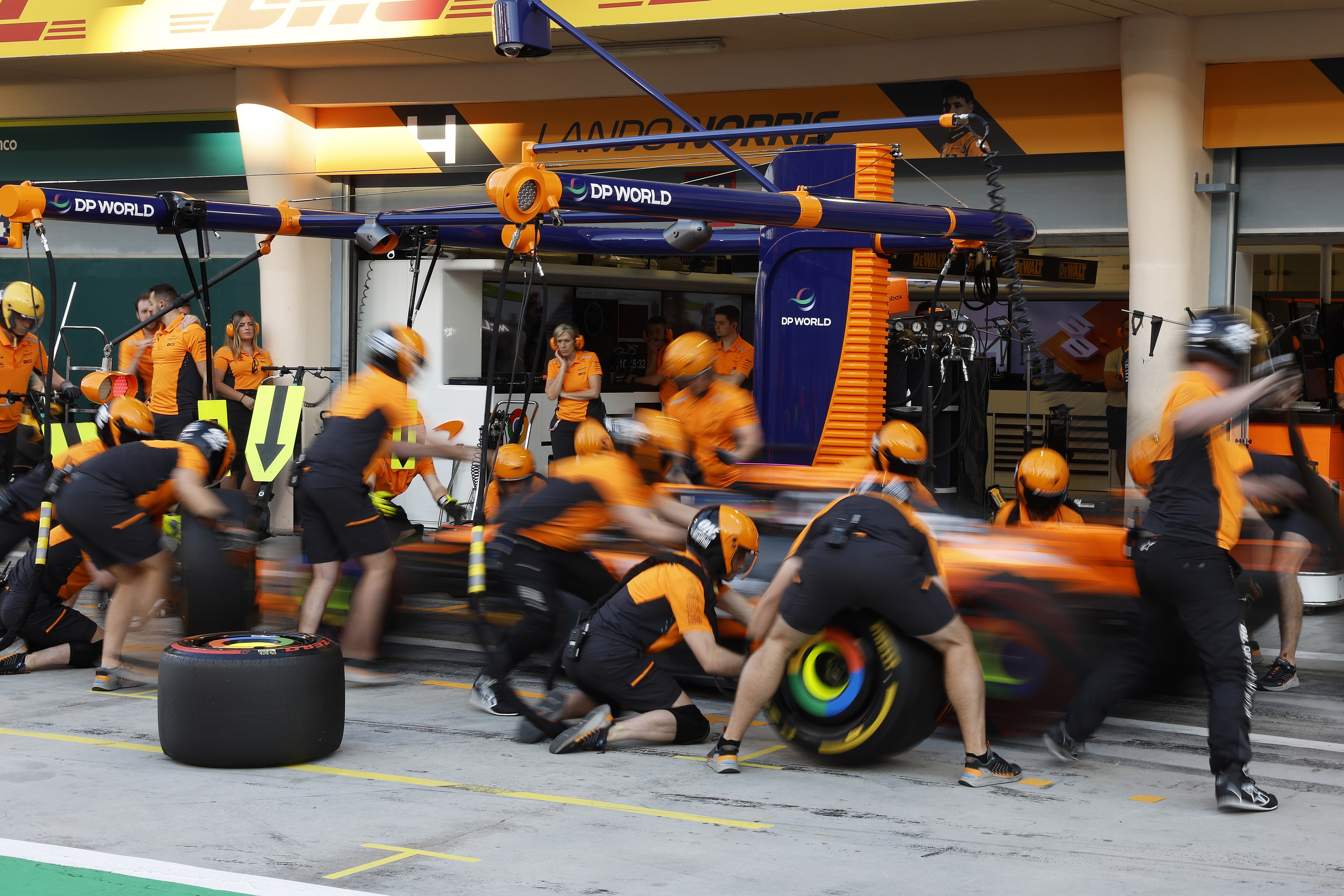
These processes have also become more efficient through the years. Biofuel trucks are often used for land transportation where feasible, for instance; DP World uses advanced logistical tools to map more sustainable travel routes.
Greenhouse gas reduction isn’t the only motivation behind these sorts of efficiency efforts, though. Cost reduction is another, and this is where the impact of these logistics teams is truly seen on the track.
“Working with DP World helps us unlock opportunities to be as efficient and as effective as possible,” the McLaren team member says, “and when you’re moving tons of freight around the world, this enables us to add competitiveness.”
That’s because, since 2021, F1 teams have all operated under a standardized “cost cap” designed to control spending and promote parity (the baseline cap was $135 million per team for the 2025 season). That isn’t just for a chassis, tires, and fuel — it’s for every element of developing and operating F1 race cars, plus all their pit and related equipment. That includes between-race logistics, too.
“The more money that can be set aside to develop the car during race season, the more likely it is that you’re going to be at the front of the grid,” van Otterdijk says. Put another way: Every extra dollar spent on equipment logistics is a dollar not spent on a faster car. “Whatever we can save them during the year in moving our stuff around is money that can then be put toward the development of the team itself.”
In the cost-cap era of Formula 1, saving money on logistics means more money that can be seen on the track. And in a sport where tenths of a second are obsessed over, every dollar counts.
.jpeg)